 Collage: Paula Balondo; Source images: Courtesy of brandsSave this storySave this story
If you’ve ever wanted the glow-boosting benefits of an exfoliating acid without the intensity of stronger options, the best lactic acid serums may be your sweet spot, as lactic acid is generally gentler than other alpha hydroxy acids (AHAs), such as glycolic acid, thanks to its larger molecular size. “Lactic acid is a gentle exfoliating acid that’s naturally derived from dairy products and is part of the AHA family,” says Mamina Turegano, MD, a board-certified dermatologist based in New Orleans. (Despite its milk-related origins, the lactic acid used in skin care today is typically synthetically produced.) “Lactic acid dissolves away dead skin cells to make skin look smoother, brighter, and more radiant—but unlike some stronger acids, it also has hydrating properties, so it tends to be more tolerable for dry or sensitive skin,” she says.
Our Top Lactic Acid Serums
- Best Overall: Mara Flower Acid Algae Serum, $74
- Best for Mature Skin: Sunday Riley Good Genes All-In-One Lactic Acid Treatment, $85
- Best for Acne-Prone Skin: Shani Darden Lactic Acid Exfoliating Serum, $75
- Best for Dry Skin: The Ordinary Lactic Acid 5% + HA, $8
Whether you’re dealing with post-breakout marks, flaky patches, uneven tone, or simply want a glowier complexion, there’s a lactic acid serum for every skin concern. These are the formulas our editors and dermatologists recommend most.
Frequently Asked QuestionsLargeChevron
- How does lactic acid compare to other exfoliating acids?
- Is lactic acid good for sensitive skin?
- What percentage of lactic acid is best for beginners?
- Meet the experts
- How we test and review products
- Our staff and testers
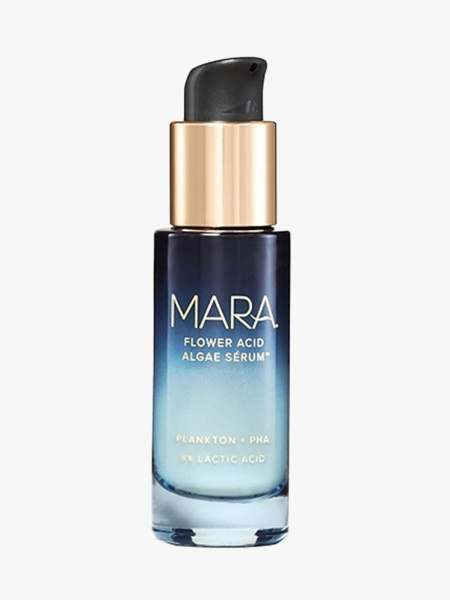
Best Overall: Mara Flower Acid Algae Serum
 Save to wishlist
MARA
Flower Acid Algae Serum
Amazon
Sephora
Bluemercury
Allure beauty director Sarah Kinonen applying the Mara Flower Acid Algae Serum
Sarah Kinonen
Why it's worth it: The name Mara references the Sea of Marmara in Turkey, where the brand’s founder—a former beauty journalist—fell down a deep rabbit hole researching marine ingredients, especially algae. According to our tester, that fascination clearly paid off in this Best of Beauty Award winner: the Flower Acid Algae Serum. At the heart of the formula is the brand’s signature algae blend, along with barrier-supporting plankton and mineral-rich French seawater, which keep skin feeling hydrated, balanced, and just a little more springy. Flower acids from daisy and hibiscus work alongside anti-inflammatory helichrysum (a medicinal plant harvested in Corsica, a Mediterranean island belonging to France) to gently refine texture, but the real resurfacing power comes from 11% lactic acid derived from beet sugar as well as gluconolactone, a gentle polyhydroxy acid.
While it’s the highest concentration of lactic acid on our list, the acid’s naturally humectant properties make the serum feel cushy and moisturizing. “Unlike many exfoliants, this multi-acid serum can brighten and refresh skin without drying out the skin barrier,” Sean Alemi, MD, double board-certified facial plastic and reconstructive surgeon based in New York City, previously told Allure.
Tester feedback from beauty director Sarah Kinonen
LargeChevron
“I use this serum every other night in place of my prescription Tretinoin. After cleansing and before moisturizer, I massage a small pump into my skin from my forehead down my neck. As someone with easily irritated skin, this never causes the usual side effects I experience with potent serums, like inflammation and/or flaking. Instead, it leaves my skin feeling smooth and looking glowy. I'll admit that $74 for an exfoliating serum is a bit pricey, but I promise it's worth the investment! I've recommended it to so many friends and family, and they've all agreed that the results are great. Plus, it won a Best of Beauty Award a few years back, so we all agree it's good!” —Sarah Kinonen, beauty director
More to know
LargeChevron
- Key ingredients: 11% lactic acid, algae, plankton, gluconolactone, French seawater, daisy, hibiscus
- Fragrance-free: yes
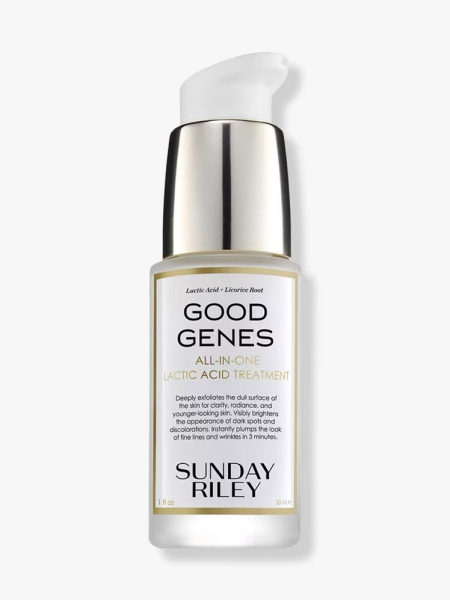
Best for Mature Skin: Sunday Riley Good Genes All-In-One Lactic Acid Treatment
 Save to wishlist
Sunday Riley
Good Genes All-in-One Lactic Acid Treatment
Amazon
Nordstrom
Ulta Beauty
Allure contributing commerce writer Christa Joanna Lee applying the Sunday Riley Good Genes All-In-One Lactic Acid Treatment
Why it's worth it: Cosmetic chemist and formulator Sunday Riley is famously meticulous about her formulas. As a result, few products have earned the level of devotion that Good Genes All-In-One Lactic Acid Treatment has. While lactic acid is great for all skin types, “mature skin often benefits from exfoliation that improves dullness and texture without overly compromising the skin barrier, and this lactic acid treatment delivers a smoother, brighter, more radiant look while still feeling relatively hydrating and cosmetically elegant on the skin,” says Dr. Turegano.
That balance is exactly what makes this 2023 Best of Beauty Award winner stand out: Within minutes, skin looks plumper, giving you a flash facial-level glow. Brightening licorice fades discoloration and post-breakout marks over time, while soothing arnica and prickly pear extract keep skin feeling calm and comfortable as the acids get to work.
Tester feedback from contributing commerce writer Christa Joanna Lee
LargeChevron
“I can count on one hand the products that I routinely go back to, and me and Good Genes All-In-One Lactic Acid Treatment have been BFFs for about a decade now. As I enter the last year of my 30s, I depend on this more than ever to keep my dry, sensitive skin from flaking and looking dull. It delivers consistent exfoliation and keeps rough patches at bay and despite being an acid treatment, it's never irritated my skin.” —Christa Joanna Lee, contributing commerce writer
More to know
LargeChevron
- Key ingredients: lactic acid (percentage undisclosed), licorice, arnica, prickly pear
- Fragrance-free: yes
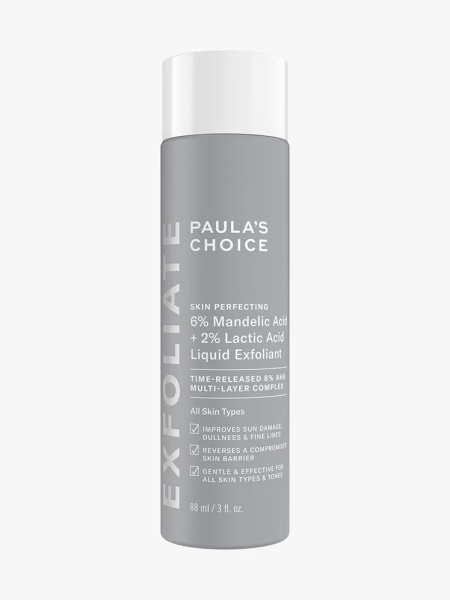
Best for Sensitive Skin: Paula’s Choice 6% Mandelic Acid + 2% Lactic Acid Liquid Exfoliant
 Save to wishlist
Paula's Choice
6% Mandelic Acid + 2% Lactic Acid Liquid Exfoliant
Amazon
Dermstore
Sephora
Allure social media manager Bianca Richards applying the Paula’s Choice 6% Mandelic Acid + 2% Lactic Acid Liquid Exfoliant
Bianca Richards
Why it's worth it: If your sensitive skin practically starts turning red at the mere mention of “exfoliating acids,” Paula’s Choice 6% Mandelic Acid + 2% Lactic Acid Liquid Exfoliant is the kind of formula that might finally change your mind about them. “It is a hybrid alpha hydroxy acid solution at a lower concentration of lactic acid (2%) than many traditional products, which reduces the risk of irritation,” says Carlos Vieira, MD, a board-certified dermatologist based in Philadelphia. The other key ingredient is mandelic acid, which Dr. Vieira explains is a high-molecular-weight molecule that penetrates skin slowly, resulting in gentler exfoliation overall.
If uneven tone and lingering post-breakout marks are among your main skin-care concerns for your sensitive skin, Dr. Turegano is especially a fan of this formula. “Mandelic acid tends to be a little gentler and more tolerable for people prone to post-inflammatory hyperpigmentation, while the lactic acid improves radiance and smoothness without feeling overly aggressive,” she says. Together, the acids smooth texture, fade discoloration, clear away dull surface buildup, and firm skin—without the stingy aftermath.
Tester feedback from social media manager Bianca Richards
LargeChevron
“Mandelic acid is often considered the go-to gentle exfoliant for sensitive skin, though it’s rare to find a mandelic acid serum on the market, let alone one that’s both effective and truly non-irritating. After using it for about a month now, it's done absolute WONDERS for my skin. Over time, using this gentle exfoliant every other day has given me a flawless, radiant complexion, to the point that I feel confident enough to go to the office without makeup. My rule of thumb is to pair an exfoliating treatment with an intensely hydrating cream or mask, because after exfoliation, my skin benefits most from a deep, replenishing hydration boost. This may be biased, but I’ve come to trust that Paula’s Choice delivers the results I’m looking for, so once I finish my bottle, I will need to re-up ASAP!” —Bianca Richards, social media manager
More to know
LargeChevron
- Key ingredients: 2% lactic acid, 6% mandelic acid, yarrow extract, Lactobacillus ferment lysate
- Fragrance-free: yes
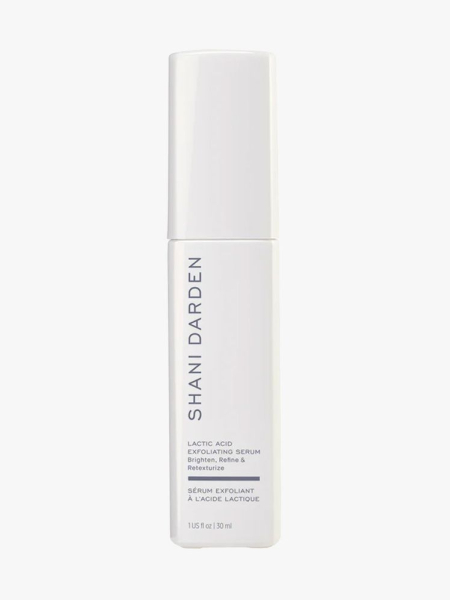
Best for Acne-Prone Skin: Shani Darden Lactic Acid Exfoliating Serum
 Save to wishlist
Shani Darden
Lactic Acid Exfoliating Serum
Amazon
Sephora
Revolve
Why it's worth it: “Shani Darden has magic fingers,” says associate beauty editor Annie Blay-Tettey of the brand’s Triple Acid Signature Peel, while former news editor Nicola Dall’Asen once told us she wished she could keep “bulk stashes” of Retinol Reform on hand at all times. So when it came to the Best of Beauty-winning Lactic Acid Exfoliating Serum, our expectations were sky-high—and it still managed to exceed them. Featuring 9% lactic acid, this serum smooths rough texture, boosts radiance, and helps skin look clearer and more even. Gluconolactone adds an extra layer of exfoliation to improve tone and clarity—especially for blemish-prone skin—without making the formula feel overly aggressive. And because over-exfoliating acne-prone skin is never the goal, a soothing blend of hyaluronic acid, aloe, and green tea replenishes hydration and reduces redness, so skin looks calmer and balanced.
More to know
LargeChevron
- Key ingredients: 9% lactic acid, gluconolactone, hyaluronic acid, aloe, green tea
- Fragrance-free: yes
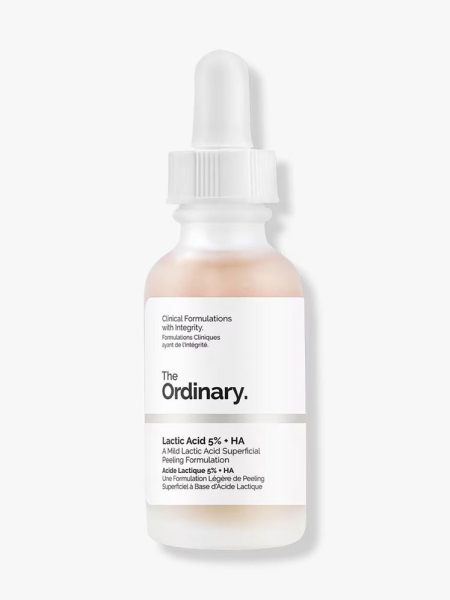
Best for Dry Skin: The Ordinary Lactic Acid 5% + HA
 Save to wishlist
The Ordinary
Lactic Acid 5% + HA
Amazon
Ulta Beauty
Why it's worth it: Sometimes dry skin isn’t just lacking moisture—it’s also holding onto a stubborn layer of dead skin cells that leaves your complexion looking dull, flaky, and rough, no matter how much moisturizer you slather on. To address that, the Ordinary’s Lactic Acid 5% + HA Exfoliating has “a mild 5% concentration that still gives gentle exfoliation, while glycerin and sodium hyaluronate offset some of the dryness and irritation that exfoliating acids can sometimes cause,” says Dr. Turegano. The formula also includes Tasmanian pepperberry, an antioxidant-rich botanical that further calms sensitivity. And if your skin becomes accustomed to lower concentrations and is ready to graduate to something stronger, there’s also a 10% version that Dr. Turegano recommends for tackling more stubborn dullness and uneven texture.
More to know
LargeChevron
- Key ingredients: 5% lactic acid, Tasmanian pepperberry
- Fragrance-free: yes
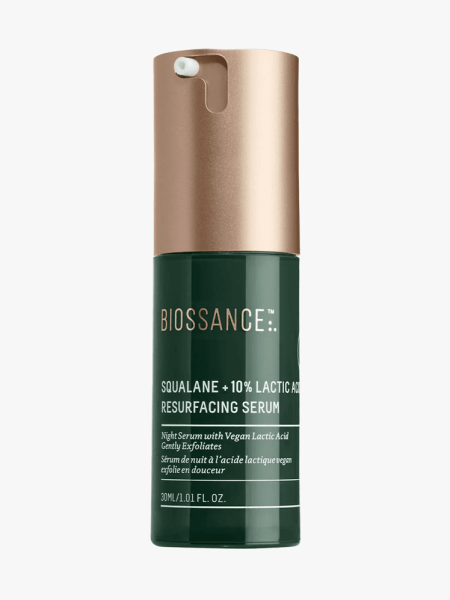
Best for Combo Skin: Biossance Squalane + Lactic Acid Resurfacing Night Serum
 SephoraSave to wishlist
Biossance
Squalane + 10% Lactic Acid Resurfacing Night Serum
Amazon
Sephora
Why it's worth it: Combination skin can be confusing to treat: Your T-zone could be slick and shiny, yet your cheeks might feel tight and dehydrated. Biossance’s Squalane + Lactic Acid Resurfacing Night Serum rebalances skin by pairing 10% lactic acid with sugarcane-derived squalane. Together, “its higher lactic acid percentage is powerful enough to address texture and clogged pores, while the squalane maintains hydration so the drier areas of your skin don’t feel tight or depleted afterward,” says Dr. Turegano. Clover extract further boosts cell turnover while helping skin recover from daily stressors like UV exposure, blue light, and pollution. As for the sensorial experience, “it’s on the richer, thicker side, but still layers nicely under other skin-care products,” adds Dr. Vieira.
While the formula skips synthetic fragrance, it does contain a touch of lavender oil, which lends the serum its subtle spa-like scent and offers anti-inflammatory and antimicrobial benefits. That said, if your skin tends to be reactive to essential oils, it may be worth patch-testing first.
More to know
LargeChevron
- Key ingredients: 10% lactic acid, squalane, clover
- Fragrance-free: free of synthetic fragrance
Other lactic acid skin care we love:
- If it’s not your first rodeo with exfoliants, an at-home peel like Ole Henriksen’s Dewtopia Flash Facial delivers an intensive reset, especially for oily, acne-prone, or congestion-prone skin. The formula tempers its hefty 25% blend of AHAs (lactic and glycolic acids), PHAs (gluconolactone), and BHAs (salicylic acid) with soothing aloe juice and hydrating hyaluronic acid to keep skin balanced as it exfoliates. Together, the acids “refine texture and enhance clarity,” says Anetta Reszko, MD, a board-certified dermatologist based in New York City.
- If you’re traveling or on the go, First Aid Beauty's Facial Radiance Pads make exfoliation about as effortless as it gets. Each pre-soaked pad delivers a blend of “glycolic acid that works synergistically with lactic acid to provide multiple layers of exfoliation,” says Dr. Vieira. While he considers it a “powerful brightener best suited for those who already have some experience with chemical exfoliators,” a hydrating, soothing blend of aloe vera, cucumber water, and hyaluronic acid cushions the formula.
- If you can carve out 15 minutes for your self-care routine, Dr. Idriss’s Major Fade Flash Mask is well worth the pause, especially if you’re already comfortable using exfoliating acids. This rinse-off treatment “combines glycolic acid, tranexamic acid, and lactic acid to exfoliate discoloration, brighten uneven pigment, and improve penetration of other brightening ingredients,” says Dr. Turegano. Unlike lactic acid treatments that focus primarily on surface-level exfoliation, this formula targets stubborn post-breakout marks, dark spots, and hyperpigmentation from multiple angles at once.
- If you're looking to exfoliate from the neck down, AmLactin’s Intensive Healing 15% AHA Lotion is built around a high concentration of ammonium lactate—the salt form of lactic acid that’s generally more moisturizing than pure lactic acid—the no-frills lotion focuses on smoothing rough, stubborn patches. “At 15%, it’s ideal for thicker skin on the hands, feet, elbows, and knees,” says Dr. Vieira. While lactic acid does the heavy lifting in softening rough texture and sloughing away dead skin cells, moisturizing ingredients like glycerin and ceramides make it a great choice for dry, rough skin that needs both exfoliation and repair.
Frequently Asked Questions
How does lactic acid compare to other exfoliating acids?
Compared with other chemical exfoliants, lactic acid “is generally considered one of the gentler exfoliating acids, which is why I often like it for people with dry, sensitive, or more reactive skin,” says Dr. Turegano. While glycolic acid penetrates deeper and is often more effective for tackling stubborn texture and discoloration, it can also be more irritating. Salicylic acid, a BHA, is oil-soluble, meaning it can penetrate pores to dissolve excess oil and debris, making it especially useful for acne-prone or oily skin. Lactic acid strikes a happy medium, offering noticeable brightening and smoothing benefits while also helping skin retain moisture. That said, if a product combines lactic acid with stronger exfoliants—or multiple acids in general—it may be better suited for those who already have experience using chemical exfoliants and know their skin tolerates them well.
Is lactic acid good for sensitive skin?
Lactic acid products are often “ideal for a sensitive skin-care routine because they’re generally gentler and more hydrating than stronger AHAs like glycolic acid,” says Dr. Turegano. Part of that comes down to its larger molecular size, which means it penetrates the skin more slowly and is therefore less likely to irritate. That gentler profile is one reason lactic acid is often recommended for dry, reactive, or easily irritated skin types. However, Dr. Turegano notes that “sensitive skin” can mean many things, so she still recommends starting slowly and avoiding overdoing it, especially if your skin barrier is already irritated or compromised.
What percentage of lactic acid is best for beginners?
For beginners, skin-care products with a lactic acid concentration of around 5% is typically a good place to start, says Dr. Turegano. Once your skin has adjusted, you can work your way up to stronger formulas. “More experienced users who tolerate exfoliating acids well may use formulations around 10 to 12%, but higher isn’t always better or faster,” she says. In fact, over-exfoliation—think redness, irritation, flaking, and a compromised skin barrier—is one of the most common mistakes dermatologists see.
Meet the experts
- Sean Alemi, MD, a double board-certified facial plastic and reconstructive surgeon based in New York City
- Anetta Reszko, MD, a board-certified dermatologist based in New York City
- Mamina Turegano, MD, a board-certified dermatologist, internist, and dermatopathologist based in New Orleans
- Carlos Vieira, MD, a board-certified dermatologist at The Dermatology Specialists based in Philadelphia
How we test and review products
When Allure tests a product, our editors look at it from every angle in an effort to best serve you. We review ingredients, scrutinize brand claims, and, when necessary, examine peer-reviewed scientific and medical studies. In addition to testing each and every product that's included in each and every review, we rely on experts who shape their fields, including dermatology, cosmetic chemistry, and medicine, to help us vet the ingredients and formulas.
For our list of the best lactic acid serums, we considered each product's performance across five primary categories: product ingredients and efficacy, packaging, fragrance, texture, and product wear. Every product was determined to have excelled in each category by our editorial team, which is composed of in-house writers and editors as well as contributors—along with special consideration from board-certified dermatologists. To learn more information on our reporting and testing processes, read our complete reviews process and methodology page.
Our staff and testers
A beauty product is a personal purchase. You might be searching for a face cream to address persistent dryness or a new nail product to add to your Sunday self-care routine; you may simply be browsing around for the latest launches to hit the hair market. No matter what you seek or your individual needs and concerns, Allure wants to ensure that you love anything we recommend in our stories. We believe that having a diverse team of writers and editors—in addition to the wide range of outside testers and industry experts we regularly call upon—is essential to reaching that goal.
After all, can we really say a skin-care product is the "best" for people over 50 if the only testers we've solicited opinions from folks who have yet to hit 30? Can we honestly deem a high-end diffuser worthy of your hard-earned cash if it's never been tested on curls? We're proud that our staff spans a wide range of ages, skin tones, hair textures, genders, and backgrounds, which means that we are able to fairly assess any beauty product that comes into the beauty closet.
Leave a Reply